Stacey King, lovable
The Bulls weren't supposed to be able to draft someone as good as Stacey King in 1989, they were too good, he was too good, everything turned out to be too good. King was never a star or even all that great as a Chicago Bull, but after a while it didn't matter, someone on this championship traveling party needed to remind us that this was supposed to be a party.
Stacey passed away over the weekend at age 59. In his work as the Bulls' color commentator since 2006, King availed himself to a new generation of fans while reminding all the older ones what a giggle factory Stacey King could be. The Bulls needed that, this century, and it is disheartening that King won't be behind the microphone for the Bulls' most-recent attempts at a rebirth.
King would abhor such talk, rather insisting we focus on the grander, goofier moments. For me, his career highlight was Stacey King's role in Chicago's Game 6 comeback in the 1992 NBA Finals. Particularly the time he absorbed the flop from Buck Williams, didn't budge, banked it in.
This was the final game of Stacey's third season, the bloom was mostly off by then for the former No. 6 selection.
The 6-11 center/forward was down to 13 minutes per contest for the championship Bulls in 1992-93, King's fourth campaign. Pointedly out of Phil Jackson's immediate rotation in spite of Chicago's aching frontcourt, King started but thrice at center. When Michael Jordan retired in October 1993, the 26-year old Stacey King was not considered one of the prevailing reasons Chicago would mostly hold serve without MJ, and King wasn't, flipped to Minnesota at the 1994 trade deadline for badly-needed larger center, Luc Longley.
King's best function was his ability to earn free throws, a trait badly lacking in Jackson's triple-post offense. Chicago was second-to-last in free throw rate in 1994 and 1993, 18th and 16th and 20th out of 27 teams in the previous three runs.
Stacey was 8-12 from the line against Portland during the 1992 Finals, not bad for a big off the bench that nobody passes to. He contributed a crucial 14-19 free throw mark as a rookie in Chicago's five-game playoff win over Philadelphia in 1990, and earned an impressive 17-20 free throw mark (to augment his 9-28 count from the floor) in Chicago's four-game loss to Detroit in the 1990 Eastern finals.
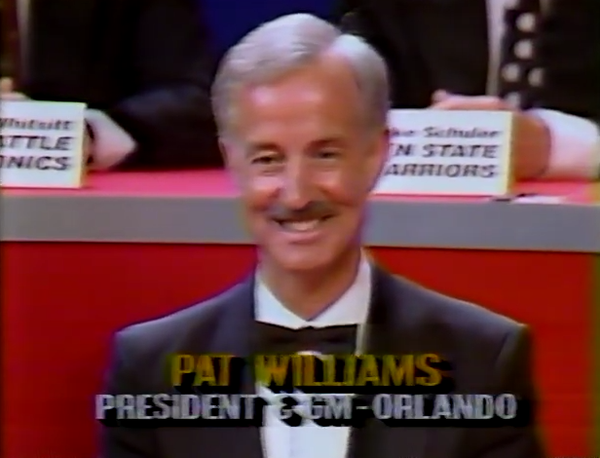
King was selected No. 6 overall in 1989 to act as either Chicago's center of the future, or starting power forward should incumbent forward Horace Grant jet for greener fields. Yet the writing was on King's wall after the first three-peat when Bulls general manager Jerry Krause signed Chicago's 25th pick in the 1993 draft – 25-year old power forward Corie Blount – to a record-setting contract:
According to league sources, Blount’s contract, agreed to earlier this week, will pay him more than $6.8 million over six years, an average of $1.11 million per season, almost $4 million of which is said to be guaranteed.
Stacey King, the sixth pick in the 1989 draft, received a Bulls deal worth an average of $1.3 million over six years, just slightly more than the contract for Blount, who barely made it into the first round and was not projected as a No. 1 selection by many scouts. In fact, Blount was not listed among the top 60 prospects when the NBA printed its draft scouting report this spring.
“It’s a remarkable deal,” said an NBA insider familiar with the contract.
It is believed to be the richest deal for a rookie selected so low in the draft who never played pro basketball before. It indicates the Bulls may not be able to re-sign starting power forward Horace Grant, who’ll be a free agent after next season, so they’re insuring Blount will be with the team for most of his career-and at a starter’s salary.
(The deal lasted 23 months.
Following the 1995 Eastern finals, where Orlando forward Horace Grant helped his victorious Magic dominate Chicago's power forward-less lineup while Blount played but 20 minutes in 10 games, Krause sold his Corie Blount insurance to the Lakers for $100,000 and "cash considerations."
And it wasn't like Blount was a bust, he played well in the NBA for a decade, even returning to the Bulls before butting heads with then-Bulls GM John Paxson.)
King's tenure was not enjoyed by most Bulls fans, frustrated by the promise of a player who seemed destined for NBA All-Star berths while working under Billy Tubbs at Oklahoma. The No. 6 pick was forced to earn his minutes and he did not, resulting in career Bulls averages of 6.6 points, 3.3 rebounds and one assist in 17 minutes per game, one blocked shot every 37 minutes. He hit 48 percent the floor, 4-16 on threes.
The three-pointers are included for a reason, King became known as the Bulls' jokester but also the team's laughingstock during his career spent struggling for minutes, acclaim.
King's portrayal in Sam Smith's 'Jordan Rules' was particularly brutal, during one exchange Stacey bragged to teammate B.J. Armstrong about the scores of three-pointers he hit while runnin' and gunnin' at Oklahoma. Armstrong paged Bulls P.R. director Tim Hallam to check King's collegiate marks and, sure as we'd guessed, King missed each of the two three-pointers he launched as a Sooner.
There was also the 11-game stretch when Stacey pulled in seven defensive rebounds, this included three starting performances, 158 total minutes.
In the last year before a King, the Bulls won 47 games and took the Pistons to six games in the 1989 Eastern finals, earning No. 18 in the 1989 draft and choosing B.J. Armstrong.
(While we're here: Krause sent his No. 9 pick in the 1986 draft, Brad Sellers, to Seattle at the 1989 draft in exchange for Seattle's promise not to choose Armstrong with their picks – No. 16 and No. 17 – in the draft.
Imagine that later this month, would Utah trade 2023 No. 16 pick Keyonte George to Washington for the promise of passing on AJ Dybantsa? No. 10 pick Cody Williams?
Seattle GM Bob Whitsitt, who was about to choose All-Stars Dana Barros and Shawn Kemp with those selections, was, like, suuure, we totally won't take B.J. Johnson or whatever his name is.)
The Bulls also had a No. 6 pick, in case they wanted to choose Barros, or Kemp. Why did an Eastern finalist have a top-six pick in 1989?
Bulls GM Jerry Krause earned it and two second-rounders from New Jersey in 1986 when the Bulls promised not to match the Nets' contract offer (two years, $1.8 million) to Bulls restricted free agent Orlando Woolridge. Krause had no interest in Woolridge, who'd missed games due to "personal reasons" late in Krause's first year running the Bulls, and pounced on the deal with Nets GM Willis Reed.
The Nets stink, perpetually, which meant New Jersey worked a 26-win season in 1988-89 without earning a first-rounder, owing it to Chicago. Woolridge, meanwhile, left to join the Lakers in 1988 as an unrestricted free agent after leading the Nets to 24 and 19 wins in 1987 and 1988. Krause also used the second-round picks to acquire Sedale Threatt, and Artis Gilmore, names readers may balk at but badly needed Bulls depth that I enjoyed cheering for as a child.
An unprotected Nets first-rounder is quite the tantalizing trade asset but Krause held onto it, watching as the lottery gave the Nets' fifth-worst record the sixth pick.
When Krause chose King many wondered if the sizable scorer would round into the steal of the draft, a can't miss prospect dropping all the way to No. 6.
As a Bulls fan, watching the Pistons and Knicks and Sixers sometimes having more fun while winning fewer games that Jordan's Bulls, there were strong and positive feelings behind adding a big man on campus to the too-stern, often melodramatic pre-championship Chicago Bulls. Someone used to playing the bad guy in the NCAAs.
The problem was that Billy Tubbs was the bad guy, and Stacey was just a goof:
A goof who averaged 28 points and 10 in his senior year, someone to provide actual low-post touch on a Bulls team who already had plenty of guys who could drop an entry pass.
Jackson's leadership was blunt and direct and King found no satisfaction pushing his head coach for more minutes with the team, Jackson saw no reason to undercut Horace Grant's development, or to deny reward to (undrafted) Scott Williams' hustle and motivation at reserve center/forward.
King's rookie season was also Jackson's first season as head coach, they each won three rings in each other's presence but it was not a warm relationship.
Also, Stacey came to Chicago with some odd habits:
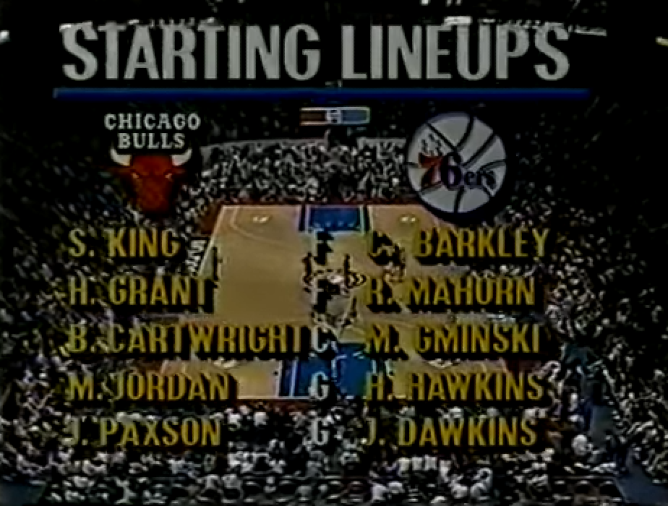
King's shining moment came in his rookie season, starting in place of Scottie Pippen (who missed the game to attend his father's funeral) and dropping 21 points with seven rebounds and two steals on Charles Barkley's 76ers as the Bulls took a 3-1 series lead, grabbing stranglehold the series.
Ed Nealy, nine points and nine rebounds off the Bulls bench, was named player of the game.
Toward the end of his second season in 1990-91, King walked out of practice.
King, who is under contract to WMAQ-TV for a ”Sports Sunday” show, told the station he would return to practice Tuesday.
He said he was upset with a Jackson quote in the Tribune Monday saying King didn`t play against the Celtics because ”I didn`t think Stacey was into it.” King said Jackson should have said something to him about any problems before talking to the press.
King had been angry all season about a lack of playing time and opportunities and suggested in January that he Bulls trade him.
When the trading deadline passed in February without any action, King appeared to settle into his limited role. But Friday in Washington, he missed the team bus to the game and was reprimanded privately by Jackson.
After Sunday`s game, he began talking again about being traded but said he`d play out the year ”and didn`t care if I go to Minnesota.”
Stacey. No.
"This is a soldier gone AWOL,” said coach Phil Jackson. ”He`s obviously crying out for discipline.”
Nah, it's a basketball player who is upset because the game isn't coming easy to him for the first time in his life. Someone unable to put up the big stats that would impress those who are booing him at home, someone unsure if he'd rather contribute more to a losing franchise instead of contributing intermittently to a pressure-ravaged Bulls outfit that hadn't won an NBA title yet.
Each side lowered its expectations, thrived. King won our hearts by crushing Danny Ferry in 1992 and ruling the 1993 Grant Park celebration with his Bill Cartwright impersonation, ravaged trachea and all, insistence on referencing the infectious recent hits "Whoomp (There It Is)" and (the arguably superior) "Whoot, There It Is."
Jordan retirement ahead of 1993-94 meant life had to turn serious again, the Bulls following through on King's three-year old "Minnesota" suggestion.
Stacey averaged 12 and six as a 28-minutes per game starting center after the 1994 trade deadline with the Timberwolves, but settled into a deep reserve role with the rebuilding club in 1994-95, Minnesota's final season before Kevin Garnett.
From there, a wayward finish. Stints with Miami, Dallas, Milwaukee (in training camp), Boston. King spent Chicago's Last Dance season working in Turkey and the NBA lockout playing in Argentina, he worked with the CBA's Grand Rapids Hoops and Sioux Falls Skyforce during the seasons the Bulls ran for 72 and 69 wins.
That minor league experience led to what for a while there looked like Stacey King's legacy, as a head coach.
Stacey took an assistant's job with the Rockford Lightning ahead of the 2000-01 season, the team split its first eight games before losing seven straight, prompting Lightning head coach Bob Salmi to (understandably) quit the team for a position at (as best I can tell) Doug Collins' assistant on NBC broadcasts (which led to Salmi's eventual gig with the Wizards when Jordan hired both).
King stayed behind in Rockford, with former Bulls washout (and fellow 1989 draftmate) Jeff Sanders at starting center, and Stacey rocked out like Bun E. Carlos was behind him with giant drum sticks.
Stacey King ran the triangle offense, promised that his "style is actually a lot like Phil's," and took the Lightning to the CBA's title game in 2002.
“During my first two years with him, I despised about 95 percent of Phil’s approach,” he said. “Now I see the big picture that I didn’t see before.”
King swears by the triangle, which Tex Winter developed and Jackson implemented. It’s something of an anomaly in the freewheeling CBA, traditionally home to fire-when-ready basketball.
“We’re taking more 18- to 20-foot jumpers instead of casting up three-pointers in one-on-one situations, which seems to be more the norm in the CBA,” King said. “The ultimate goal here is to get to the NBA, so I’m trying to establish an NBA system. I’m trying to make this entire environment as close as possible to the NBA.”
I ran it in the CBA when I coached and won over 70% of my games with random players. It has to be taught right and the reason why you don’t see it fully run in today’s game is coaches don’t know how to teach it and it’s easier to run PnR and drive and kicks now. But teams do… https://t.co/gY6L6OAegx
— Stacey King (@Stacey21King) July 31, 2025
King left the Lightning for the Sioux Falls Skyforce for 2002-03, amid the CBA's restructuring after Isiah Thomas destroyed the damn thing. King left the minor leagues for good when the CBA's various mergers failed, and the league shuttered.
After a year off, he joined the Bulls' local cable set, and moved to the broadcast booth beginning in 2004-05 as longtime Chicago Bulls color guy Johnny "Red" Kerr began to show signs of being a longtime Chicago Bulls color guy.
King took over when Kerr stepped down in 2006, and was an avuncular presence for two decades with the team.
The only Bull booed during the six-championship run, speaking as the cherished voice of the franchise.